
Les Vins de Vincent
Domaine Profile
- Location: Grapes from Ardèche, Rhône. Wine made in Ayze, Savoie.
- Varieties: Syrah, Grenache Noir
- Viticulture: Purchased grapes, organic (certified or in official conversion)
- Vinification: Manually harvested, 100% whole cluster, ambient yeast fermentation, no punch-downs or pump-overs, pressed with a vertical press, aged in stainless steel tanks, minimal added SO2, less than 15 ppm total at bottling.
In their words...
Originally from the Ardèche, having moved to Haute-Savoie in 2022, we have not severed our ties with the department where we were born and continue to make wine from the local grape varieties that we have cherished for so long. Since the 2020 vintage, we have been buying the harvest from a winemaker friend based in the south of the Ardèche. He cultivates Syrah, Grenache Noir, Cinsault and Grenache Blanc organically on a high-altitude clay-limestone plateau situated between Vallon Pont d’Arc, Valvignères and the picturesque village of Saint-Montan. This is a cool, late-ripening terroir where the harvest takes place just a few days before that of the Domaine du Gringet. The wines produced here are remarkable for their freshness and vibrancy, with pH levels ranging from 3.2 to 3.5.
We harvest the grapes by hand. The grapes are transported by refrigerated lorry to the Domaine du Gringet in Ayse, Haute-Savoie, where the winemaking and ageing processes take place.
We vinify all our wines using whole bunches, and fermentation is carried out by indigenous yeasts. We carry out maceration without punching down or pumping over ; this lasts between five and twenty-five days, depending on the wine. The wines are matured in concrete, stainless steel and fibreglass vats. Thanks to the low pH characteristic of this terroir, we produce straightforward, stable wines with very low sulphur levels (a maximum of 12 mg of total sulphur per litre across all vintages in 2024).
By purchasing grapes from the same plots every year, we aim to establish the identity of each cuvée over time and refine our winemaking techniques to best express the tremendous potential of Gras’ terroir.
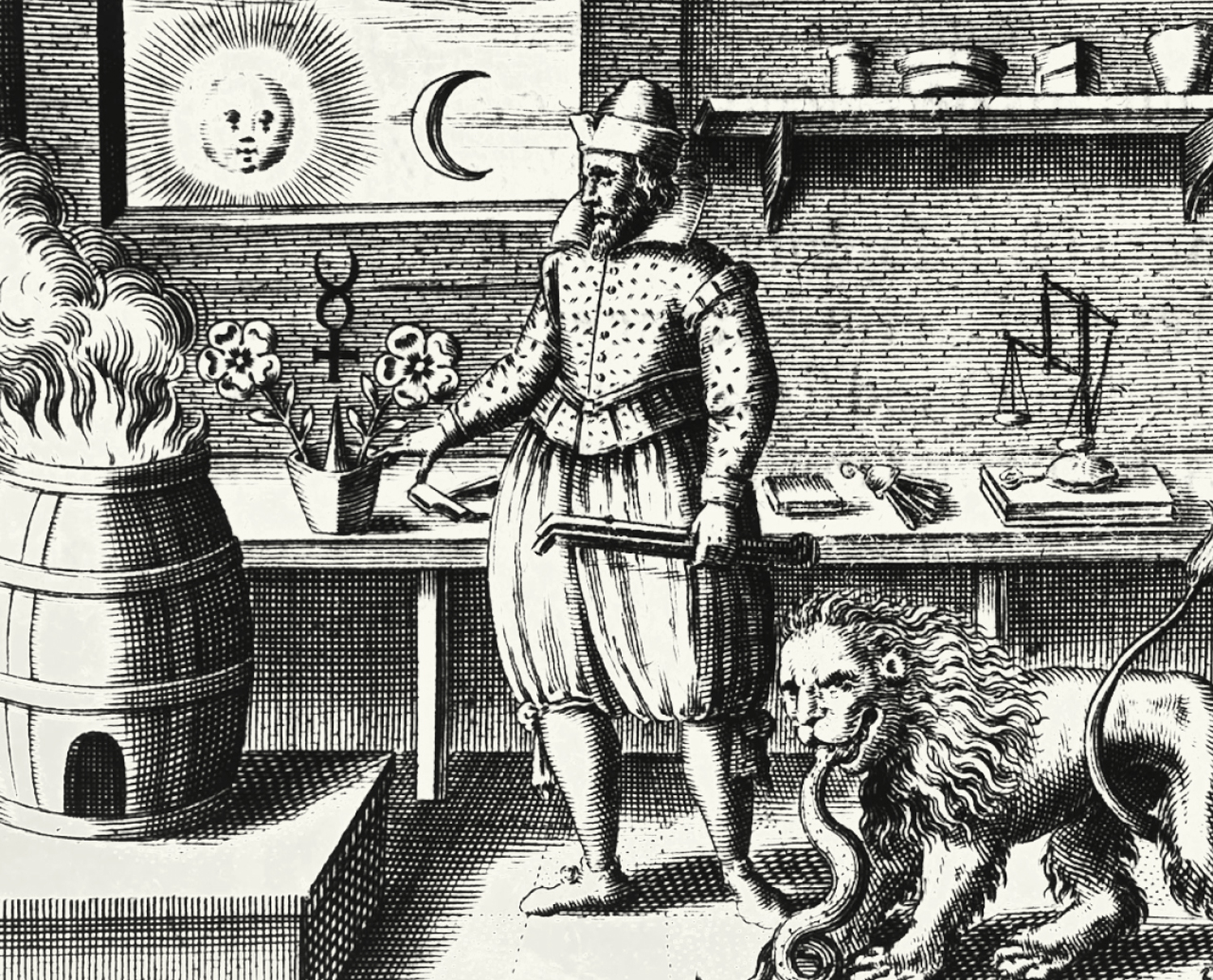
The labels were chosen and designed by Vincent, who is passionate about alchemy. The engravings on the labels are taken from a 17th-century work entitled « Atalanta Fugiens ». These engravings depict open books, blending an alchemical glossary with Eastern and Western symbols and ancient myths. They carry philosophical and spiritual significance, which everyone is free to interpret according to their own feelings and sensibilities.
The 2024 vintage is one of excellent ripeness in this part of the Ardèche. We have produced our three usual cuvées. The fresh and juicy Syrah ‘Yseult Mon Amour’ (with a few bottles undergoing extended maceration this year), the incredibly flavourful Grenache Noir ‘Les Noces Alchimiques’ and the light red with a slightly Jura-style profile ‘À l’Ami Faust’, which we have been producing since 2023 from the Cinsault grape variety. New for this vintage is the arrival of our first Ardèche white wine, made from the Grenache Blanc grape variety, which we vinify and age in the same style as our Gringets. It is called « L’Humanité avant le Déluge » (in English : humanity before the flood) and its label features the central panel of the triptych « The Garden of Earthly Delights » painted by Hieronymus Bosch, a 15th-century Dutch artist. The other two panels of the triptych will give rise to two new white cuvées in the years to come…
BW&Co's Profile
Vincent Ruiz was born in Valence in the Rhône in 1995. In high school, he chose to specialize in literature, philosophy, and languages (Baccalauréat L), with the intention of attending film school. Instead, he studied water management and conservation, before changing from water to wine by pursuing Viticulture and Enology studies in Belleville, in the Beaujolais. He graduated in 2017.
What drew him to winemaking was chemistry, which had piqued his interest while studying water management. His great-uncle was also influential: “He is an engineer. He built the dams on the Rhône. He did well and had a large cellar full of old Chaves and Trollats.”
During his studies, Vincent’s main apprenticeship was at Domaine Coursodon in Saint-Joseph, after which he took a break to travel on foot throughout Turkey. Upon his return in 2018, he found a position working in the vineyards and cellars of Franck Balthazar in Cornas.
On the side, he began making a little wine with purchased organic grapes from Ardèche. “It was out of passion; it wasn’t a vital need, I had my job with Franck,” Vincent says. “My neighbor was a natural wine nut and he gave me a space to vinify.” In 2019, he founded his micro-négoce, Les Vins de Vincent, to formalize the experiment and produce wine in commercial quantities.
Domaine du Gringet was founded in 2021 by Vincent, Franck, and wine brokers Miguel Sarzier and Raphaël Bennour, to take over the vineyards of the late Dominique Belluard in Savoie. A three-hour drive north of Vincent’s small winery, this could have spelled the end of his négoce, but the co-founders agreed that the terroirs from which he sourced his grapes were too special to let go.
The clay-limestone terroirs at ±400 meters elevation produce wines that are surprisingly crunchy and fresh, especially coming from Rhône varieties. This is due to remarkably low pHs. For the 2023 vintage, they were between 3.16 and 3.3, whereas in other parts of the Rhône, the pH’s for Syrah sometimes exceeded 4. In addition to the freshness they preserve, these pHs are ideal for wines with little (15 ppm total or less) or no added SO2.
Vincent’s wines are now vinified at Domaine du Gringet, where the grapes are brought in refrigerated trucks. Because of the refrigeration, the whole bunches are put into tanks at 5°C. The tanks are inerted with CO2 on the first day and loosely covered with tarps for an ambient yeast, semi-carbonic maceration without punch-downs or pump-overs that can last one to three weeks depending on the vintage and the variety. Vincent presses at a density between 1020 and 1030. The juice is then returned to the same tanks to finish fermenting and for aging. Racking depends on the vintage – yes, in 2022, as the vintage was very reductive; but none in 2023. The wines are bottled in June, with no added SO2.
Despite the natty protocol, Vincent’s wines are not glouglou. This is precisely why we find them special. In a sea of zero-zero reds that emphasize fruit with little else, Vincent’s wines have a rare combination of tangy fruit, mouth-watering brightness, and structure.
“I received my wine education in the Drôme and Ardèche,” Vincent says. “And what excites me with the reds is the use of whole bunches. I like what the stems bring: a spine that holds the wines together. They add a chewiness that is part of the wine’s skeleton. Every time I taste a destemmed wine, I find it lacking dimension, a part of its soul. It’s true, though, that whole clusters can create austerity. But after a little age this softens and really adds a precious extra dimension.”
Wines
-
White
-
Red