
Domaine du Gringet
Domaine Profile
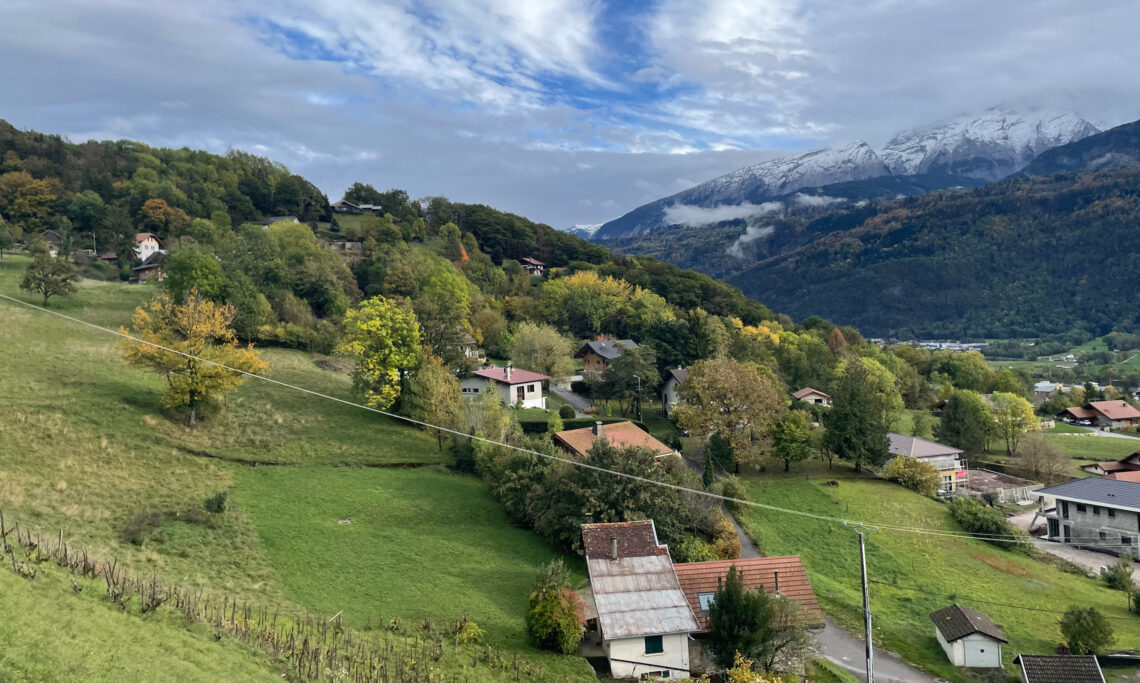
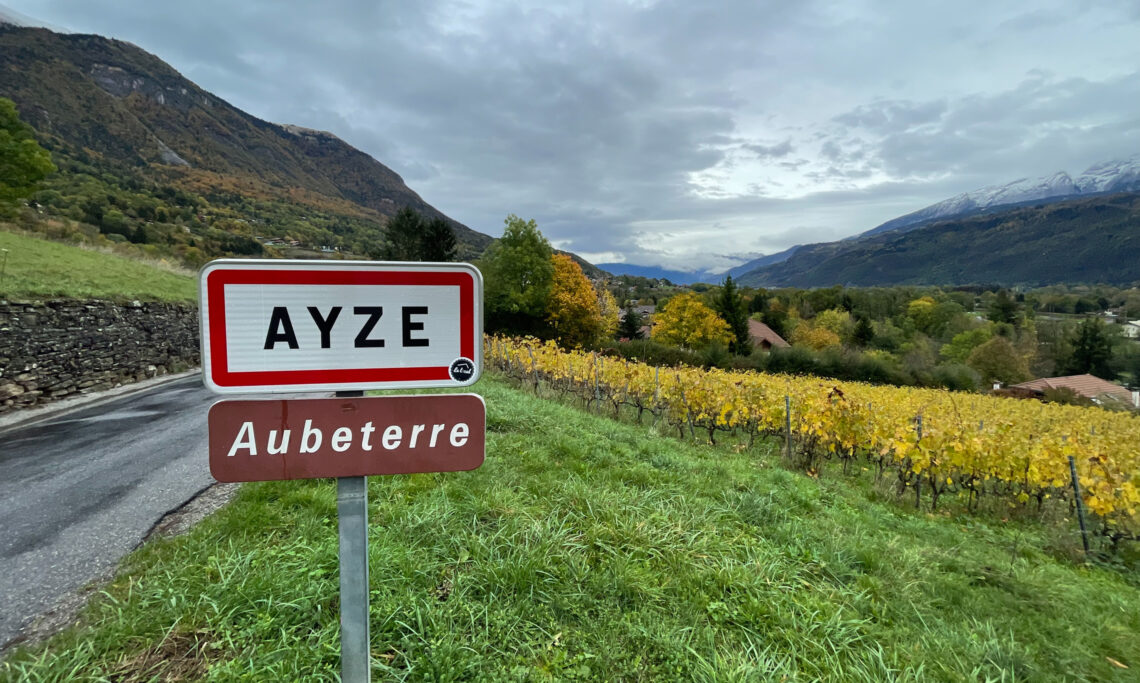
- Location: Ayze, Savoie, France
- Size: 10.0 hectares (24.7 acres)
- Varieties: Gringet, Altesse, Jacquère
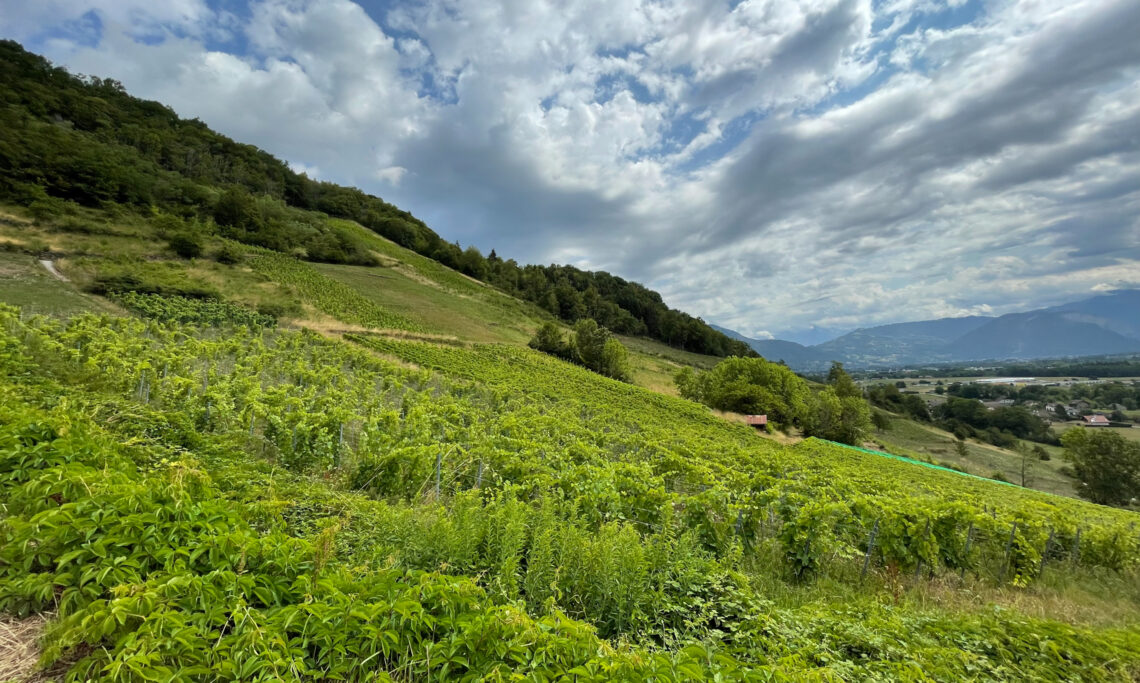
- Viticulture: Biodynamic, vineyards managed with natural cover crops in between the rows, plowed underneath the vines.
- Vinification: Long and gentle pressing (4-7 hours), settled and decanted, ambient yeast fermentation, aged for 18 months, minimal SO2 additions, no fining or filtration, bottled with DIAM 10, DIAM 30, ArdeaSeal, or fleur de liège.
Farming practices at Domaine du Gringet
2024 is our third and final year of conversion to organic farming, and it is with the 2025 vintage that Domaine du Gringet will be fully certified.
Vine pruning is of fundamental importance. We do not use any labour from outside the estate to carry out this task, in order to ensure consistency and uniformity in both our decisions and our approach. Electric pruning shears are prohibited ; only manual pruning shears are used to achieve precise, clean cuts. We employ gentle, physiological pruning practices largely inspired by the teachings of Marceau Bourdarias. These practices aim to facilitate the flow of sap by avoiding large pruning wounds, systematically creating drying cones, grouping wounds on the same side, and accepting and making the most of the vine’s natural growth… It is also, and above all, a matter of carefully adapting the crop load to the vigour of the vine, so as to achieve a virtuous dynamic balance between building up the vine’s reserves and grape production. In this regard, patience and a measured approach are essential, particularly in weaker plots (for example, our Mondeuse plot on the Butte du Pré Milleret) or in plots where we are rationalising our pruning methods by switching from a mixed cordon/Guyot system to the Royat cordon system (this is notably the case for the vines in the ‘Le Feu’ and ‘Etraz’). These pruning practices naturally require precise, rigorous and timely debudding once spring arrives.
We remain firmly focused on our goal of restoring soil fertility. Since taking over in 2022, we have not ploughed the soil in our productive vineyards. As a result, the vineyards are completely covered in grass, with the aim of producing sufficient organic matter to eventually make the soil more fertile. We allow the grass to grow throughout the entire season and only mow it at the end of the season when it has turned yellow and flowered, a sign that it has reached maturity. Throughout the year, the resulting mulch covers the soil and helps retain moisture. In the longer term, this mulch – which is essentially carbon – is broken down by bacteria and fungi. When these micro-organisms die, the nitrogen they have consumed from the air is released onto the soil surface. Earthworms help to carry this nitrogen deep into the soil, where it then becomes available to the vines. In some plots, it is very difficult to set these microbiological cycles in motion because the soil is so poor that grass barely grows. When this is the case, it is necessary to introduce a very large amount of carbon into the plot. This is what we did by applying around fifty tons of straw per hectare to two plots : in the autumn, for the second time, to our Mondeuse plot on the Butte du Pré Milleret, and in late winter to part of our Gringets vineyard in the locality known as ‘La Paille’. Following this work (combined with strict and severe pruning), we observed significant improvements from the 2025 vintage onwards, and even more so in 2026, in terms of the vines’ vigour, the quantity produced and the content of assimilable nitrogen in our musts (both in terms of quantity and quality, with an increase in the proportion of organic nitrogen within the total nitrogen content).
This commitment to regenerative viticulture is not, however, without its challenges. At present, we have achieved very good results in the foothill vineyards, which have rich and fairly deep soils. On the hillsides, the results are more mixed : we are seeing an increase in shoot diameter (indicating higher reserves) and more vigorous growth, but yields remain very low, in the order of 12 to 20 hectolitres per hectare. Competition for resources between the vines and the grass means we have to apply fertiliser to ensure that soil regeneration does not compromise the harvest too much. Against the backdrop of global warming, we are convinced that we have chosen the right cultivation approach and recognise that restoring balance always takes time. The adverse weather conditions of 2024 led us to adapt the management of our cover crops. Due to the density of the grass cover, which acts as a moisture reservoir, our vines suffered more from frost than our neighbours’ in April 2024. We now carry out three mowing operations a year : one in June/July when the grass reaches maturity, another in the autumn, and a final one in March before the arrival of spring.
As we are based in a region where there is a high risk of downy mildew, we adopt a prophylactic approach to vine management. We carry out early, precise and rigorous debudding. The vines are suckered out and we carry out at least three tie-ups during the season. The side shoots are removed right down to the level of the bunches. In this way, we prevent excessive foliage growth, ensuring that the bunches are well ventilated and less prone to fungal attacks.
The entire vineyard is managed without hedging or topping. We create arches between each vine by braiding the vines. This involves an extra fortnight’s work compared to a vineyard that is pruned, but it helps to strengthen the vines’ resistance to fungal diseases. Indeed, when a vine is cut, it has to heal the wound. To do this, it produces hydrogen peroxide, which oxidises the plant tissue and makes it more susceptible to mildew. In addition to this improvement in fungal resistance, we achieve a denser and more extensive canopy which, on the one hand, protects the grapes from the sun during the summer and, on the other, allows for more complete ripening thanks to a much higher photosynthetic potential.
We also use plants to help the vines grow or to revitalise them after a setback. As long as the risk of downy mildew remains moderate, we spray macerates of stinging nettle, horsetail and comfrey, which act as foliar fertilisers. Following the April frost, we prepared a valerian preparation and sprayed it throughout the vineyard. During this very wet year, we also applied silica to the vines on several occasions to dry out the grapes and foliage, thereby improving their health.
This year’s wines: cuvées, winemaking and ageing
In 2024, we had planned to produce our first vintage of Ayse sparkling wine, but low yields following the frost meant we had to give up on the project. The estate’s first Gringet sparkling wine will therefore be from the 2025 vintage.
We have continued to vinify our vineyard by individual plot for the 2024 vintage. Each lieu-dit is vinified separately and produces a dedicated cuvée. All the wines are vinified and matured in the same way. We seek to express the uniqueness of each lieu-dit rather than to produce cuvées differentiated by ‘artificial’ winemaking or ageing techniques. This quest to capture the true expression of the terroir is realised through ageing in neutral containers (concrete and sandstone).
Gringet grapes are gently pressed directly for five hours in pneumatic presses. The resulting musts are oxidised on contact with the air and cold-settled for seventy-two hours. The juices are then lightly sulphited and transferred to concrete vats and stoneware jars, where indigenous yeasts initiate alcoholic fermentation. Malolactic fermentation always takes place, and the wine is aged on its lees. The Brownian motion associated with our ovoid concrete tanks ensures continuous stirring of the lees throughout the ageing period, which enriches, adds texture to and enhances the complexity of the wine. In 2024, we decided to extend the ageing period from twelve to eighteen months to ensure our wines stabilise more effectively. Bottling under a protective atmosphere took place without the addition of sulphur on 26 and 27 March 2026. We continued ageing the wine for six months in the bottle before releasing the bottles.
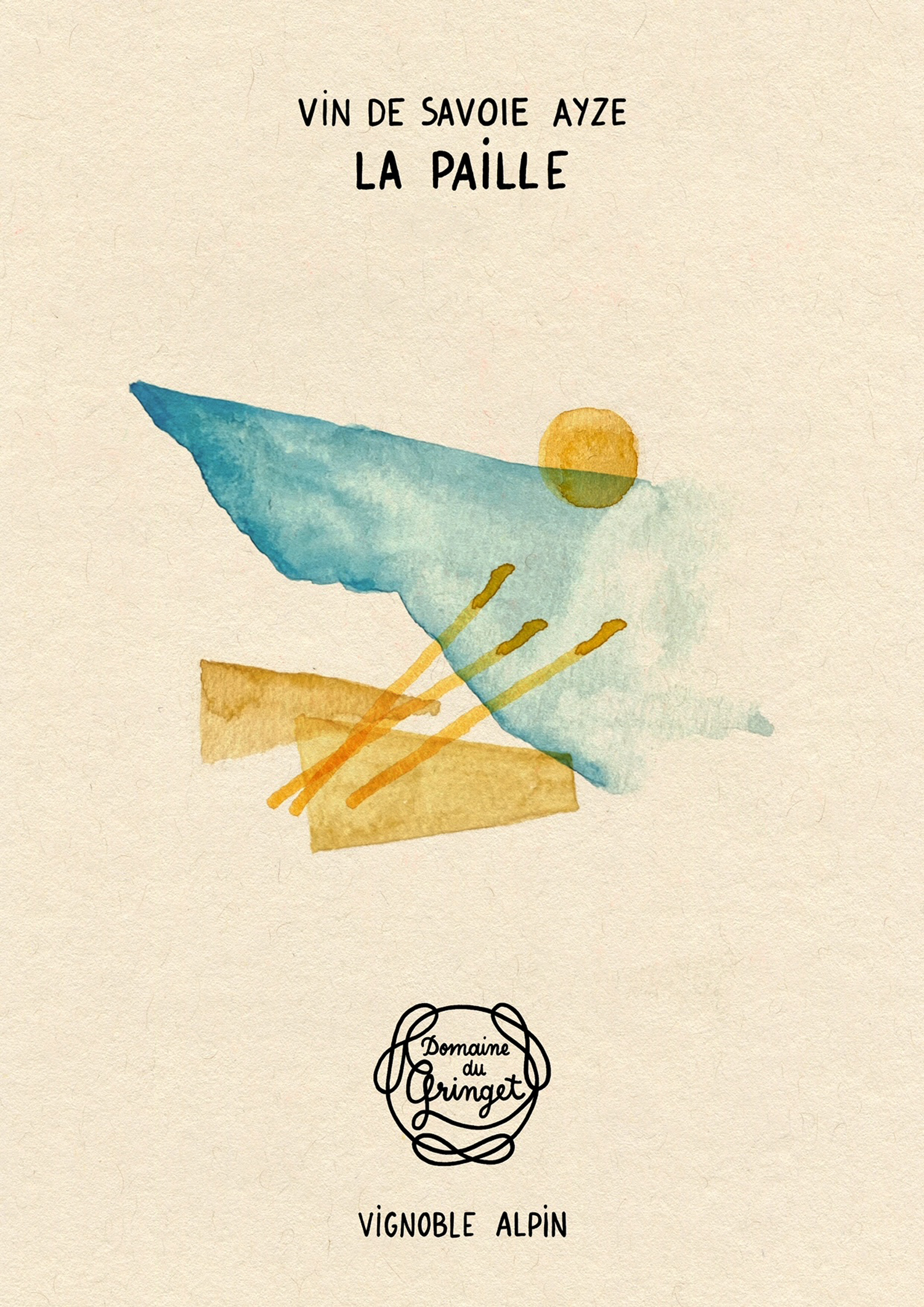
In the 2024 vintage, our Gringet wines display a fresh profile with low alcohol content (between 10.5° and 11.5° alcohol) whilst retaining lovely body and texture. Visually, the wines are much lighter in colour and clearer than the two previous vintages. This fresh, late-harvest vintage brings out the differences between the terroirs particularly well. The hillside wines shine particularly brightly, with vigour and plenty of length. It should be noted that, once again, we were unable to produce the Altesse cuvée from the Aubeterre vineyard. The April frost severely reduced the harvest from this plot. In light of this, we have therefore decided to blend the Gringet from La Paille and the Altesse from Aubeterre into a cuvée named ‘Paille-Aubeterre’ this year.
The spring frost also hit our Mondeuse plots particularly hard. We produced just seven hectolitres of wine from over half a hectare. Aged for eighteen months in concrete egg-shaped vats, it is a rather light, fruit-driven red wine which we decided to reclassify as a ‘Vin de France’ and which we named, after a short story by Dostoevsky, ‘Les Démons’.
This year, alongside the 2024 vintage wines, we are releasing a few magnums and jeroboams from the 2022 vintage that we have left to mature in the cellar (next year, we will be releasing the large-format bottles from the 2023 vintage). At present, it is always a great pleasure to taste the 2022 vintage wines. The ‘La Bergerie’ and ‘Etraz’ cuvées are now ready to drink. Their textures have softened and refined; any reduction has now been integrated and contributes to their complexity and freshness. They are now at the ideal stage for some wonderful food pairings. The crus (Le Feu, La Paille and Chez Edouard) remain impressive and are beginning to express themselves well, though it is still best to wait a few more years before drinking them.
This year we are also offering two wines from the 2022 vintage, which we have left to mature in the cellar since they were bottled. Firstly, there is a Mondeuse ‘Le Feu’, made from the small plot of Mondeuse we own in this lieu-dit. This warm, sun-drenched 2022 vintage suits this grape variety particularly well, as the wine naturally has an alcohol content of 12°. The grapes were destemmed by hand, berry by berry, at the stem end to allow for skin contact. This involved 150 hours of labour for 300 litres of wine. With this « Mondeuse caviar », we first carried out a strict carbonic maceration for one week, then punched down the cap morning and evening during the 15 days of maceration that followed. The wine was pressed in a small vertical ratchet press, then aged for nine months in a stoneware egg and for nearly forty months in the bottle. This wine has never had any sulphur added.
The other wine from the 2022 vintage that we are offering has been bottled exclusively in magnums and jeroboams. We are offering you a different interpretation of the Ayse terroir, as this is a blend of two-thirds Gringet du Feu and one-third Gringet de la Paille, co-fermented. It was aged for nine months in concrete eggs and forty months in glass. We have named it « Le Feu de Paille » which literally translates as « a straw fire » in English.
This year we are also releasing two wines from the 2023 vintage : the ‘La Paille’ cuvée, which was not ready last year, and an experimental Gringet aged for 30 months in oak. This rather free-spirited, non-topped-up wine is labelled as a Vin de France under the name ‘Le Double’, a name once again inspired by a short story by Dostoyevsky.
To finish, we also purchased some Jacquère from Adrien Berlioz in Savoie. We vinified it in the same way as our Gringet wines, in an ovoid concrete vat, with early bottling in July 2025 followed by 10 months’ ageing in bottle. It is a wine classified as IGP Vin des Allobroges, which is lively and taut with just the right amount of texture.