Domaine Sérol & Champs Libres
Domaine Profile
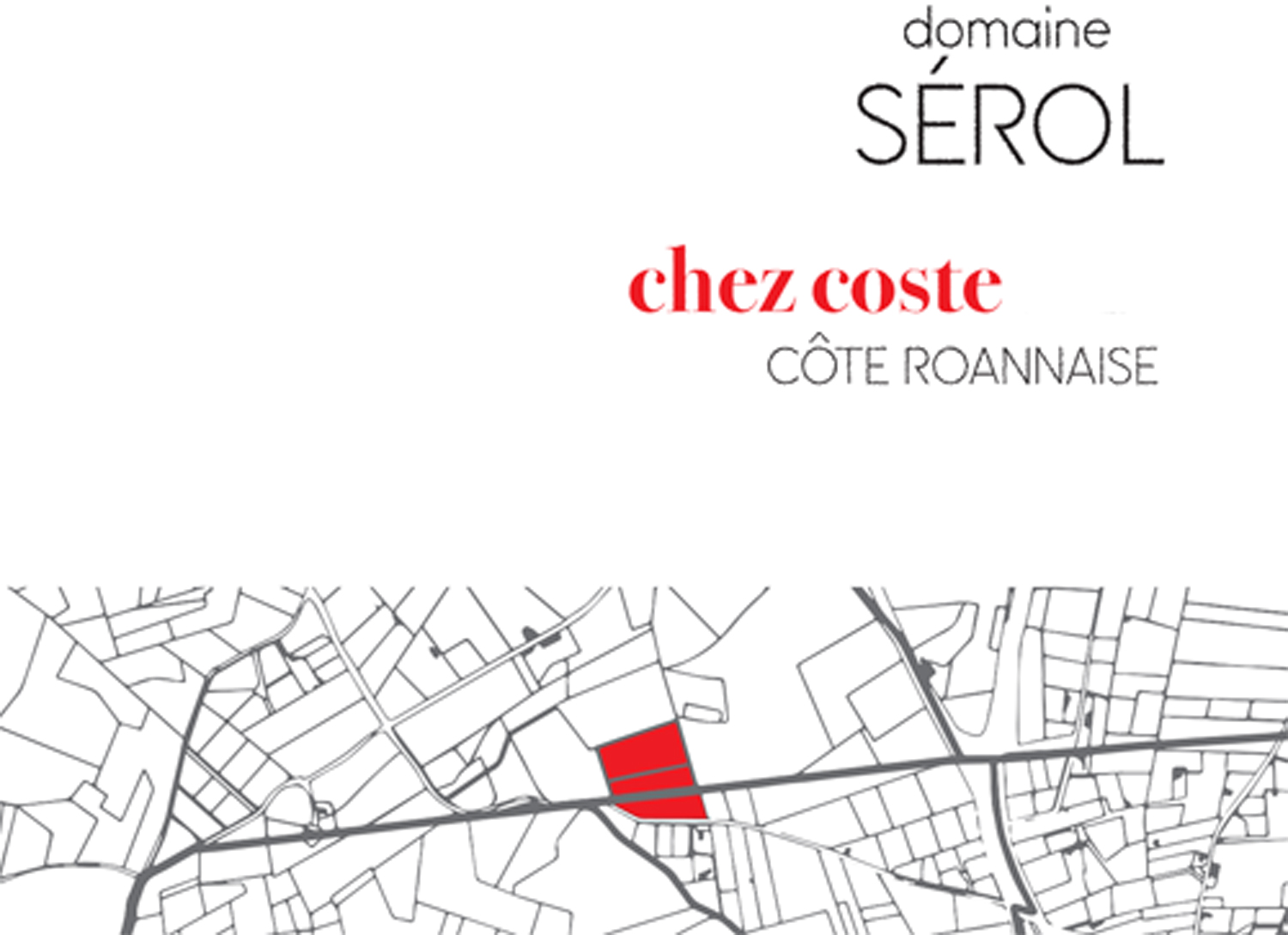
- Location: Renaison, Côte Roannaise, Loire Volcanique, Loire
- Size: 38 ha (93.9 ac)
- Varieties: Gamay Saint Romain, Viognier, Chenin Blanc
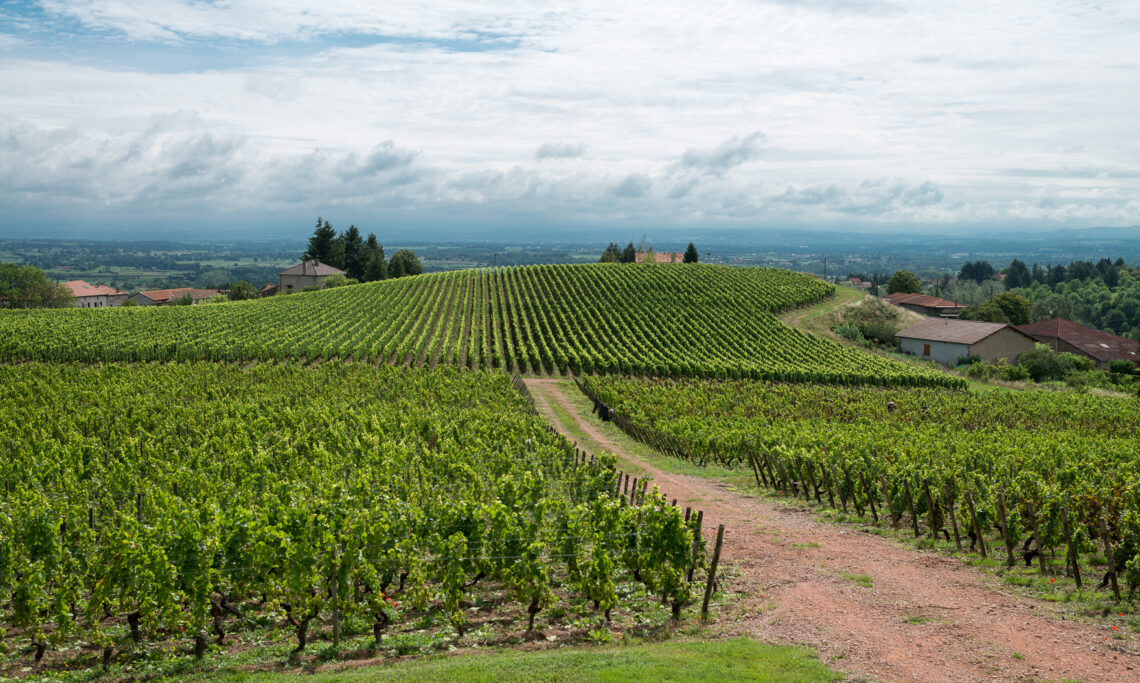
- Viticulture Domaine: Organic (Ecocert, 2014) and biodynamic (Biodyvin, 2016), high-density vineyards plantations 8,000-10,000 vines/ha, cover crops, limited tillage, high canopies (1.7 m), late hedging (Viognier is not hedged), massal selections.
- Viticulture Champs Libres: Organic (certified), purchased grapes.
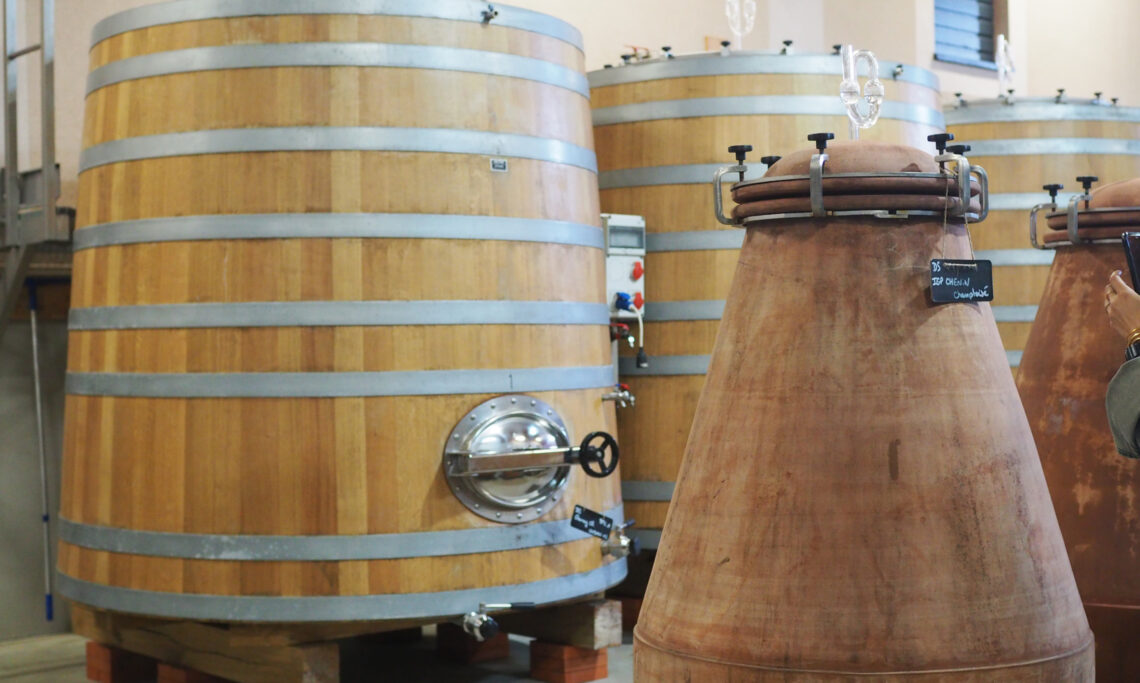
- Vinification: Harvested in 12 kg cases, sorted with 3 sorting tables, 20-80% whole cluster, "Chez" cuvées destemmed, ambient yeast pied de cuve, zero punch-downs, pump-overs, aging in concrete or wood tanks, amphoras, filtration, under 40 total ppm SO2, "Chez" cuvées 0-20 ppm.
- Sustainability: Bottle weight 395 g (still wines), capsules replaced by wax, carbon neutral vinification and élevage through geothermal and solar power.
From the 500 meters elevation of Domaine Sérol, the Loire Valley is arresting.
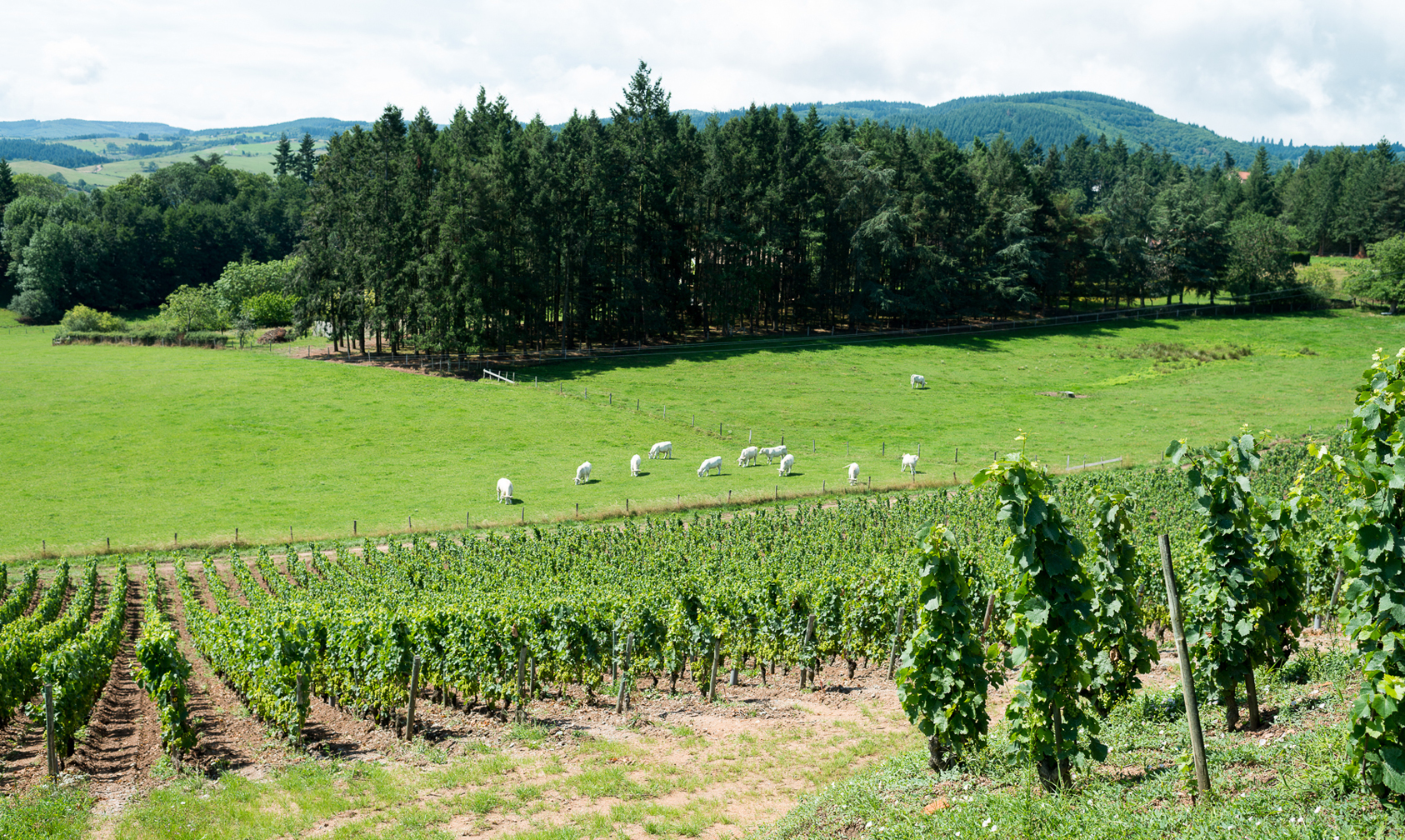
On the river’s banks, dairy farming is extensive but hardly industrial. Small herds of Charolaises graze ample pastures that are shaded by an abundance of trees. Visit in spring if you can: yellow dandelions and buttercups battle the grasses for color dominance, while small patches of feed here and there seem planted only for contrast.
Stencilled on the horizon, the Beaujolais Hills are not as close as they appear. It’s not the vineyards yet — those are further east. Still, it’s only 75 km to Morgon but 200 km to Sancerre. Add Gamay on Granite and the Côte Roannaise’s inclusion in viticultural Loire feels as if the people in charge just rubber-stamped A River Runs Through It.
What the Côte Roannaise really feels like is a frontier: isolated, sparsely visited, quiet, beautiful. Instead of intensive monoculture, its handful of vineyards are scattered among more Charolaises and firs. It’s very Alpine, which adds to the outpost mood.
Perhaps it is the lot of all frontiersfolk to be uncertain whose hymn to sing. The Roannais don’t say this to visitors (maybe not even to themselves) but they know their tribe does not live west, where the Loire is headed. Their hills and wines are eastern.
Another appellation lives in their daydreams: Vins du Lyonnais. But patriotism for the Loire goes to their bones — such pride in their eyes when they speak the river’s name.
History
There were 20,000 ha of vines in the Roannais in the 1800s. Only 250 ha remain.
The first major expansion of viticulture happened here after the year 938, when the local Abbey of Ambierle joined the Order of Cluny that did so much for the vine in the Mâconnais.
When the Canal de Briare was completed in 1642, linking the Loire and the Seine, Roanne became the major hub for commerce between the north and south of France.
Vignerons took advantage of Roanne’s position and planted vines everywhere. The most famous wines came from Renaison, home to Sérol, and were sold in Paris as Vins d’Arnaison.
In the second half of the 19th century, the arrival of the railway displaced river transport as the faster, cheaper route to Paris. Phylloxera, oidium, mildew, a succession of poor vintages in the early 20th century, two world wars, and finally the great frost of 1956 compounded the decline. By 1970, the Roannais had lost 99% of its vineyards.
The Sérols
The Plasse family can be traced back to the 17th century at Les Estinaudes, above Renaison — the same farm the domaine occupies today.
In 1920, Jean Sérol married Fanny Plasse. Wounded in WWI, he managed to keep the farm running but was unable to make substantial improvements. At the time, there were 2 ha of vines alongside a small dairy. The wines were sold in bulk.
Born in 1940, Robert Sérol was the first son in a family of five daughters. Because of his father’s fragile health, he quit school at the age of 14 to work on the farm.
After two years of compulsory military service, Robert returned to the farm, taking over in 1964. Farm income was so modest that he worked three days a week at a plant nursery while his wife, Marie-Thérèse, worked as a typist.
Robert’s first commercial domaine-bottling was in 1971 — just 600 bottles. Jacques Coeur, a Michelin-starred restaurant in Renaison, bought 24, sold them within weeks, and regularly ordered more. The positive reception encouraged Robert to bottle his entire production at the domaine in 1973.
At the same time, Robert worked to improve quality with the help of an enologist. The goal was to achieve consistency and to make wines that were light, fruity and appealing — wines to drink and enjoy after bottling, without any ambitions for aging.
In 1978, Les Frères Troisgros in Roanne — then and now one of France’s most celebrated restaurants — purchased Robert’s wine, the first from the Côte Roannaise featured on their prestigious list. Soon after, Chez Castel in Paris, a famously exclusive restaurant and nightclub, poured Sérol by the glass for its international clientele of actors, models, and politicians.
Robert purchased and planted more vineyards, growing the domaine to 12 hectares. His next goal was to secure AOC status for the Côte Roannaise.
The region had been granted the now-defunct VDQS classification in 1955, better than Vin de Pays but still below AOC. The first request for an upgrade in 1972 was summarily rejected.
A succession of vignerons spearheaded a qualitative renaissance, but it was Robert, after he became president of the Roannais vignerons’ union in 1989, who led the final push.
In 1994, the Côte Roannaise was granted AOC status. The recognition reflected real progress: the growers had restricted the appellation to the best hillside vineyards, planted solely to Gamay, and imposed much stricter production standards.
Carine and Stéphane
Stéphane was born in 1973, the youngest of three brothers. They helped in the vineyards and winery even before they were teens. “I learned the vigneron’s gestures at a young age,” Stéphane says.
Was it a turn off?
Philippe, the middle child, took over the dairy. Fred, the eldest, did end up in wine but chose hospitality, in Singapore.
Stéphane is the only vigneron. “I enjoyed the rigor, the demands,” he says. “Don’t laugh,” he adds. We can’t help it, he’s comically OCD.
Stéphane studied viticulture and enology in Belleville, Beaujolais, then Davayé, Mâconnais — Jean-Philippe Bret was a classmate. He interned in Beaujolais, the Côte Châlonnaise and Barossa.
Robert drank his own wine and bottles from friends. It was in school that Stéphane’s appetite to taste the benchmark wines was born. He returned from Australia with 70 bottles — Robert had to pay the customs fees, he recalls fondly. His wine epiphany, though, was a magnum of 1993 Henri Jayer Cros Parantoux brought to the domaine by a friend of Pierre Troisgros.
Stéphane joined his father in 1996. Busy with commitments to the vigneron community, Robert was grateful. Tensions arose but Stéphane describes his father as supportive, “even when I made stupid mistakes.”
Carine, Stéphane’s wife, was born in 1976. They had mutual friends and met in 2000 on the estate for a New Year’s Eve celebration.
It took her until 2008 to move to Sérol. She wasn’t certain she’d leave her career in HR consulting to work at the domaine. Renaison was a “radical change” from her corporate life in Lyon. Maybe she’d continue remotely as an independent consultant.
Carine had no formal wine training but was encouraged to hone her palate from a very young age. Her father worked in chocolate, and even as a child, she was recruited for tasting panels. With both Italian and Spanish family (her maiden name is Montoya) wine was always on the table. She remembers visits to Andalusia, where bars still had barrels of Pedro Ximénez from the 1800s. “This, you need to taste,” Carine was told. She’d dip her finger in the glass and bring it to her lips.
She arrived at the domaine just in time for harvest and made herself useful by helping to prepare meals for the winery team and the pickers.
After that, she observed the business side of Sérol, but not for long. “I’m not the type to just look at what’s going on without sticking my hands in it.” Carine quickly became Stéphane’s partner in the domaine — not silent at all.
Stéphane’s OCD in production combined with Carine’s assertiveness and efficiency in everything else are wondrous. The domaine’s growth, notoriety, concern for sustainability, and ongoing contributions to the appellation are the work of a couple.
The wines are beautiful, the work prodigious. Carine and Stéphane are also a joy to hang with and are hugely respected by other vignerons. Nicolas Faure, whose cult following has never dented his humility, told us that he pulled out his Gamay in Burgundy because he couldn’t make one as good as Sérol.
The Sérols have three daughters. Carine and Stéphane resolutely shielded them from duty to the domaine. They may not have succeeded with the youngest.
Farming
While relating his internship at Méo-Camuzet in 1995, Olivier Lamy told us Henri Jayer still stopped by daily to taste and advise. Olivier copied everything in a notebook and tried it at home. “But it didn’t work,” he concluded. “We didn’t have the same vines.”
The pithiness landed like an aphorism.
When Stéphane joined, a bottle of Sérol “left the winery at €2.80 — retail,” Carine points out. “The vineyards were not in great shape,” Stéphane adds.
What they’re all saying is that the price a domaine can sell its wines for dictates how far it can push vineyard work.
It wasn’t all bad at Sérol. Harvesting was always by hand. And more crucially, Robert resisted the 1960s trend of pulling out every other row to fit a tractor that could be used for other farming needs. The Sérol vineyards are planted to the traditional density of 8,500 vines per hectare instead of 4,000.
Stéphane implemented strict debudding to control yields, raised the canopy to achieve better photosynthesis and ripening, and transitioned from conventional to sustainable farming with certification from Terra Vitis.
Organic certification came in 2007 for Les Blondins, a vineyard the Sérols own with the Troisgros family. Stéphane moved to convert the rest, but a severe black rot attack in 2009 forced a pause. In hindsight, it helped: by the time the domaine achieved full certification in 2014, the Sérols felt in control and confident — and had no crop loss in the transition.
Stéphane didn’t always embrace biodynamics — the esoteric side never spoke to him. Enter Yves Hérody.
Hérody, a geologist, first came to the Côte Roannaise for a terroir study. He also consults on farming and carries a mythical aura: a wizardly Nate Ready beard, notoriously hard to reach (as friends who’ve tried will attest), and a “Méthode Hérody” that some vignerons find perplexing. Stéphane, Cartesian by nature, has no such qualms.
The Côte Roannaise has very acidic, poor soils that erode easily. The Sérols credit Hérody and his colleague Dominique Massenot with profoundly altering the physiology of their soils and vines through terroir-specific composting, amendments, and cover crops. It resulted in better soil structure and water retention, vines with more vigor, and grapes with thicker skins.
The domaine was certified biodynamic in 2016 through Biodyvin. In the U.S., Sérol cannot be certified, as Demeter has trademarked the word biodynamic in that market — absurdly.
Pruning is Guyot Poussard and the canopy has been raised to about 1.7 m. Hedging is carried out as late as possible (after the summer solstice in 2025), except for Viognier, which is left unhedged and braided.
Vignerons in the Côte Roannaise and neighboring Côte du Forez have created twin conservatories of Gamay de Saint-Romain, an indigenous biotype: one at Sérol and the other at Vins de la Madone, whom we also represent. New plantings at Sérol use massal selections from the conservatory.
Vines once dominated the Côte Roannaise, but the collapse of viticulture broke the monoculture. With only a fraction of the hectares remaining, vineyards are now scattered among pastures, rotating crops, and woods. The result is far greater biodiversity than in more celebrated regions. The Charolaises also supply the Sérols with organic manure, which they use to make their own compost.
Soil organic matter and water content vary widely, depending on the parent material — the weathered rock from which the soils form. The region’s decomposed granite, called gorrhe, retains little water and less than 2% organic matter, which is very low. With such limited resources, competition with other plants is fierce. Tillage and vegetative ground cover must be carefully managed.
The Sérols seed cover crops (rye, clover, peas, radishes...) in every other row, alternating every two years. They try not to destroy the cover, rolling it but avoiding tillage in the rows and cultivating only under the vines. In dry vintages, they use disks in the rows to aerate the soils without turning them over. In very dry vintages, the cover is destroyed in spring.
Champs Libres
The wines from estate vineyards are labeled Domaine Sérol. Those from purchased grapes or must are Sérol Champs Libres. No confusion.
The name is a wordplay: avoir le champ libre means to be free to act without constraint. Adding the “s” makes it free fields — a nod to the freedom to explore beyond the Côte Roannaise.
An ironclad rule: all grapes for Champs Libres must be certified organic.
The project began after several difficult vintages, when the Sérols purchased fruit for Turbullent and Cabochard to safeguard their own reds. They soon found the bought grapes better suited to those cuvées’ style — different terroirs, maturities, pHs.
It also addressed another concern: sustainability includes people. Maintaining a permanent team, with healthcare and profit-sharing, requires more stable production than our current climate affords.
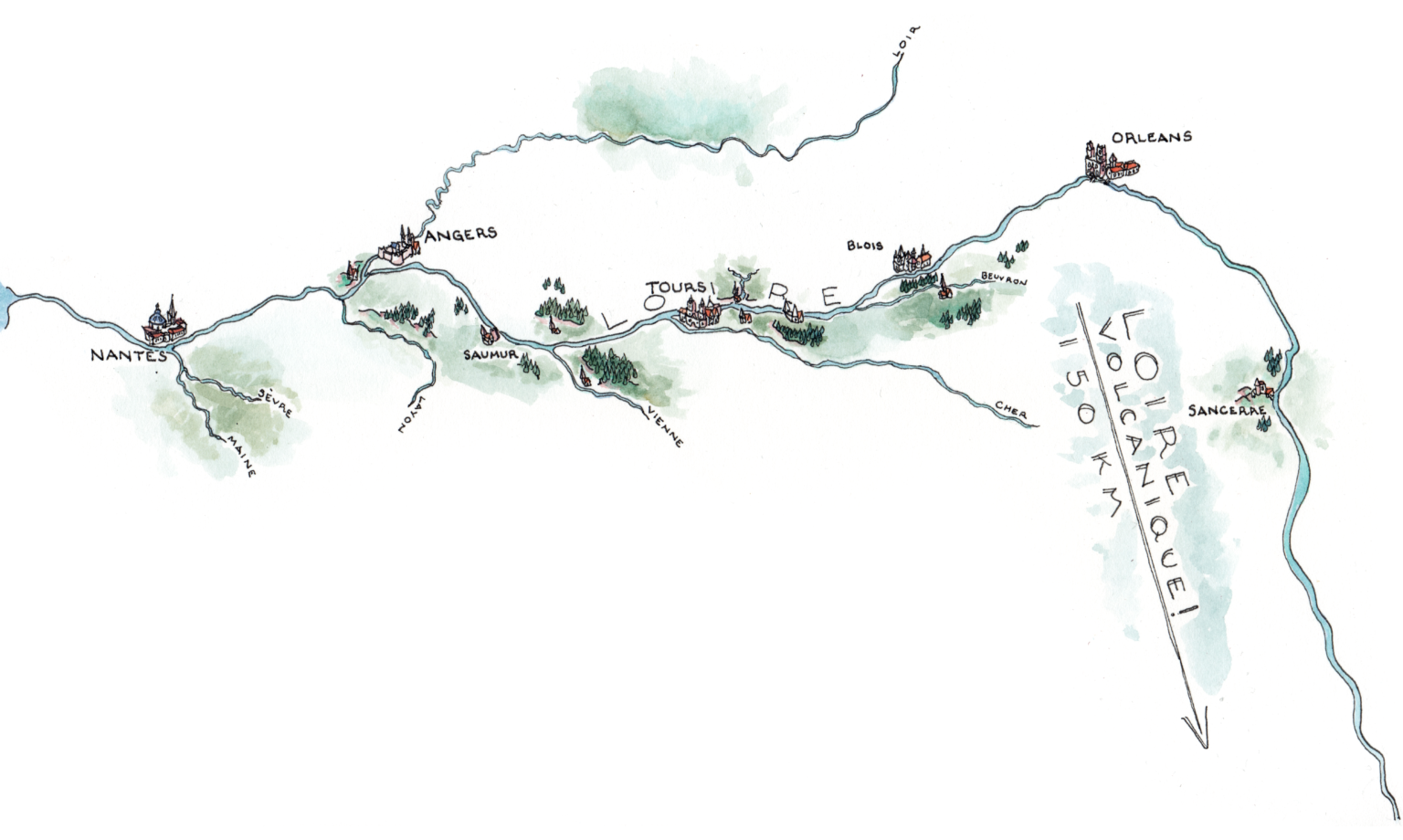 © Children's Atlas of Wine
Loire Volcanique
Loire Volcanique is not an official sub-region but a collective of vignerons from the four appellations located on the Massif Central mountains and its foothills: Côte Roannaise, Côte du Forez, Côtes d’Auvergne, and Saint-Pourçain.
The name Loire Volcanique was chosen because the Massif Central contains the largest congregation of French volcanoes. That doesn’t mean all the wines come from volcanic terroirs.
Loire Volcanique doesn’t include every grower in those appellations, only those who see value in the project. It launched in 2019 with 35 members and has grown to about 50 today.
But is the Loire Volcanique branding useful? Yes — presenting a sub-region is far more compelling than pushing a handful of obscure appellations on their own.
“When I started showing our wines at trade tastings,” Stéphane explains, “buyers would ask me What is Côte Roannaise? Why and where should we put it on our wine list? And by the time I had explained the appellation, there was no time left to actually talk about the wines.”
Five years later, Loire Volcanique has made inroads. It’s no Chenin-style tsunami, but it is catching on.
Is there enough cohesion to talk about a sub-region? Yes. And despite a similar absence of tidiness we don’t ask this question for Alsace, Languedoc, Touraine, Corsica, the Southern Rhône, or Savoie, do we?
Location: Isolated from the rest of the Loire. Grouped together around the Massif Central.
Elevation: High. Vineyards run 200–600 meters, but all of Côte Roannaise and Côte du Forez sit above 400, and Côte d’Auvergne above 350.
Climate: Semi-continental and temperate (cold winters, warm summers), Foehn effect (warm, dry mountain winds), large diurnal variations (cold nights).
Geology: Côte Roannaise is overwhelmingly granitic; Côte du Forez majoritarily granitic, seconded by basalt, then schist and more; Côtes d’Auvergne is on basalt or limestone; Saint-Pourçain on granite, limestone, or alluvium.
Grapes: Gamay rules the AOPs. It’s the only variety authorized in Côte Roannaise and Côte du Forez (red, rosé, sparkling). It makes up 70% of Côte d’Auvergne and 40–75% of Saint-Pourçain reds, where it must be blended with Pinot Noir.
We have avoided the IGPs, and really, you should too. The range of permitted varieties is an uncurated flea market. Yes, Sérol also makes Chenin and Viognier, and they are important — when speaking of the domaine, though, not when presenting Loire Volcanique.
Two IGP wines are worth noting: Pinot Noir from Auvergne and Tressallier from Saint-Pourçain, both absurdly excluded from the AOPs if not blended with other grapes.
Call it Loire Volcanique, or Auvergne as some do, or focus on just one grape and call it a “New Gamay Wonderland” as Jon Bonné does in The New French Wine, but there is a there there, to borrow from Matt Kramer (who borrowed from Gertrude Stein).
So, when asked what Loire Volcanique is, this is our introduction:
Loire Volcanique is four small appellations, isolated from the rest of the Loire and grouped around volcanoes in the center of France. It’s beautiful, wild, and it feels like a frontier. The vineyards are high elevation and Gamay is the most widely planted grape. If you need one soundbite: Loire Volcanique is a New Gamay Wonderland. Would you like a deeper dive while we taste, or silence to focus on the wines?
You will find our original article on Loire Volcanique here.
Cooler Climate and Gamay de Saint-Romain
While Beaujolais does have some vineyards above 400 meters, every vine in the Côte Roannaise is planted between 400 and 550 meters. There’s even a push to extend the appellation to 600 meters to offset climate change.
Both regions share a semi-continental climate, but Beaujolais is also subjected to a warmer Mediterranean influence, now amplified by warming trends. The Roannais, meanwhile, sees greater diurnal variation, with substantially cooler nights.
The result is slower maturation in the Roannais. Harvest usually begins one to two weeks later than in Beaujolais, though this is partly because of Gamay de Saint-Romain.
This biotype is indigenous to the region. It produces longer, looser bunches with thicker skins and frequent millerandage (shot berries). It ripens about a week later, reaching phenolic maturity at 0.5–1% lower potential alcohol. Its juice-to-skin-and-stem ratio is lower, and stems lignify poorly, leading to different winemaking choices: at Sérol, no carbonic maceration and only partial stem inclusion.
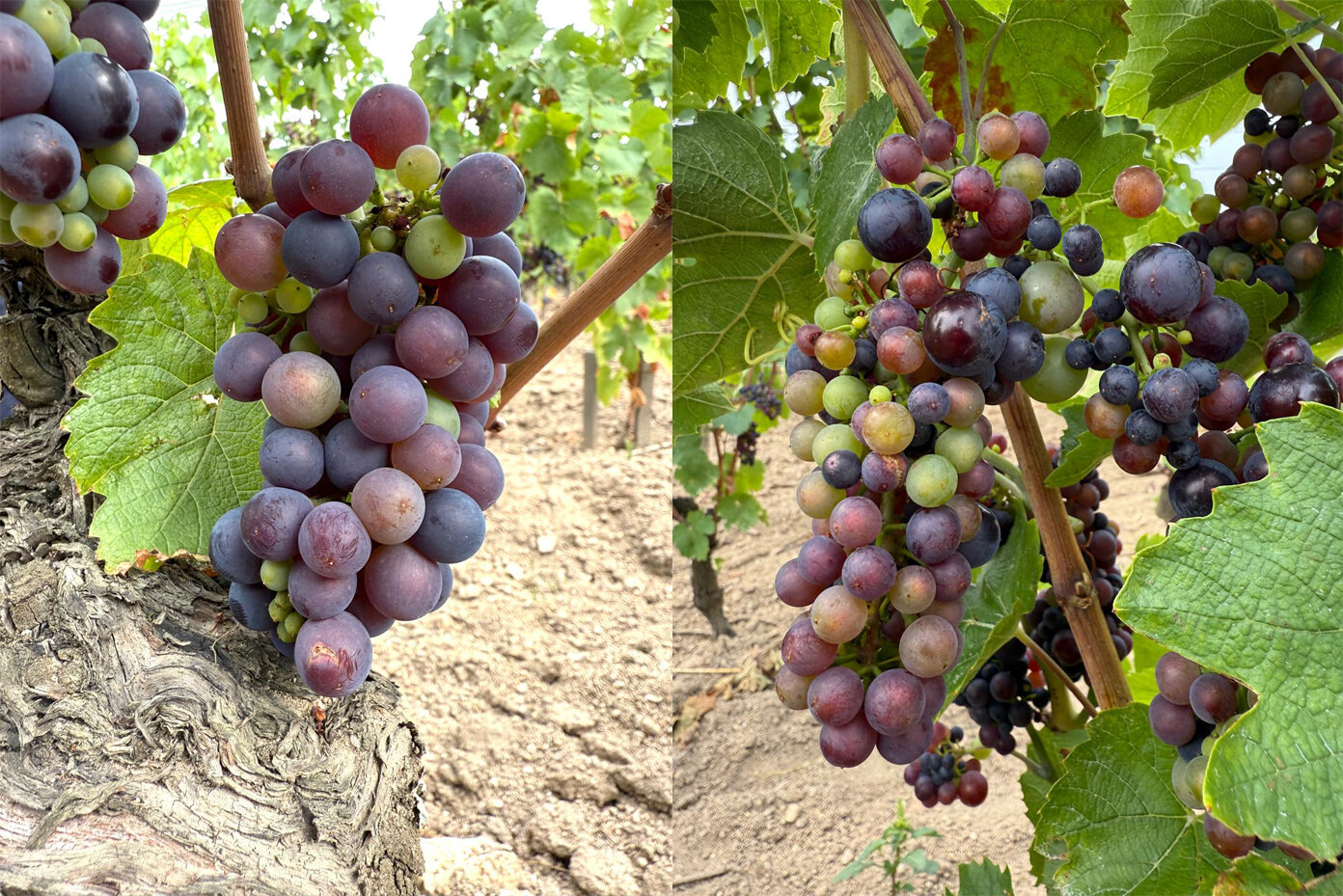 Left: Gamay Noir - Right: Gamay de Saint-Romain. Aug. 6, 2025.
Despite Gamay on Granite, the Côte Roannaise is not another Beaujolais — let alone a lesser one.
If Beaujolais today leans toward ripe black cherry, or even blackberry in some vintages, Côte Roannaise remains red-fruited, and with additional fresh markers of blood orange and tapenade. It walks a thin line we adore, one that lies between the realms of fruit and herbs.
The French have a charming expression for people with irresistible but unconventional beauty: ils ont du chien. The Côte Roannaise has dog.
Full history and ampelography of Gamay de Saint-Romain can be found under the Côte Roannaise section of this article: Welcome to Loire Volcanique.
Winemaking: Reds
Grapes are harvested in 12 kg lugs that are transported to the winery without being dumped into larger bins. This very gentle process keeps berries intact with no discharged juice.
The lugs are cooled overnight to approximately 20°C, Stéphane’s preferred temperature to start fermentation.
Prior to vatting, bunches are sorted on three tables: two to select the best bunches for stem inclusion, plus an air-blade table that eliminates anything weighing less than a berry — insects, leaves, but crucially: raisined berries.
Stem inclusion varies from vintage to vintage, with a 20–80% range, except for amphora cuvées that are entirely destemmed. Whole clusters are placed at the bottom and top of the tanks, with destemmed berries in the middle.
Because of the reductive nature of Gamay, Stéphane prefers porous vessels. Red macerations never take place in stainless steel, but in concrete and wood tanks, or amphorae: Oudan and Perdrizières in wood; Blondins in wood and concrete; Chez Muron and Chez Coste in amphorae; the others in concrete.
Since 2007, all wines have been fermented with ambient yeast, and more recently, Stéphane has introduced pieds de cuves. Macerations last 2–3 weeks with zero punch-downs, but short, regular pumpovers to wet the caps.
After pressing, the wines are racked back into their fermentation vessels for aging for 7 to 11 months. The reds are loosely filtered.
The protocol differs for amphorae. At 1000 density, they are topped off with juice from the same parcels, then closed and left untouched to macerate until March. The next step lies somewhere between free-run juice and pressing. A tarp is placed over the amphora, then slowly filled with water. The weight of the water “presses” the berries. They are bottled after settling and a loose filtration.
The amphorae are vinified and aged with no SO₂, often bottled without, sometimes with a maximum of 20 ppm total.
The other reds are bottled with a maximum of 40 ppm total, added in doses of 20 ppm or less: on the cap after vatting, in the spring, then adjusted before bottling.
Other Sustainability and Team Welfare
As of the 2024 vintage, bottles for the still wines weigh 395 grams, and wax has replaced capsules.
In 2020–21, the Sérols added additional buildings and focused on converting to geothermal energy, a project completed in 2023, after drilling a total of one kilometer for seven wells to tap into the geothermal network.
Solar power was integrated at the same time, making vinification and élevage carbon neutral and the estate nearly energy-autonomous. Despite Carine’s vow to stop building, the couple is now adding a storage facility with enough solar panels to take the domaine fully off-grid.
The human side matters just as much.
All employees who work more than three months are included in a profit-sharing program.
Rather than outsourcing, the Sérols still hire their own harvest crew — around 45 pickers.
Traditionally, after pickers fill their buckets, they empty them into a large hotte (a backpack-style bin) carried by a porteur — essentially a human grape mule. At Sérol, that back-breaking step has been eliminated: the 12-kg picking cases are loaded directly onto small electric-powered sleds (think vineyard snowmobiles) that whisk them out of the rows without anyone straining under 50 kilos of grapes.
Wines
-
Sparkling
-
White
-
Rosé
-
Red